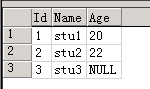
我们用下边SQL语句统计下人数、平均年龄、最大年龄、最小年龄:
select
	count(*) as count1,
	count(age) as count2,
	avg(age) as [avg],
	max(age) as [max],
	min(age) as [min]
from Studentcount1 count2 avg max min
----------- ----------- ----------- ----------- -----------
3 2 21 22 20
可以看到,除了count(*),其他聚合函数都忽略了stu3。可以使用isnull函数给空值设置一个默认值,让聚合函数不忽略该行:
select
	count(*) as count1,
	count(isnull(age,0)) as count2,
	avg(age) as [avg],
	max(age) as [max],
	min(age) as [min]
from Studentcount1 count2 avg max min
----------- ----------- ----------- ----------- -----------
3 3 21 22 20
注意:对avg、max、min聚合函数不应使用isnull,否则会出现用两个人的年龄计算三个人的平均年龄,这显然是不合理的。
很多时候,我们都会给字段设置一个默认值,当字段值为空值时就使用默认值,再看Student表:
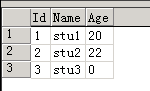
我们用下边SQL语句统计下人数、平均年龄、最大年龄、最小年龄:
select
	count(*) as count1,
	count(age) as count2,
	avg(age) as [avg],
	max(age) as [max],
	min(age) as [min]
from Studentcount1 count2 avg max min
----------- ----------- ----------- ----------- -----------
3 3 14 22 0
很显然,avg、min的值不是我们想要的,avg和min都应忽略stu3,这时我们可以用nullif函数让聚合函数忽略它:
select
	count(*) as count1,
	count(nullif(age,0)) as count2,
	avg(nullif(age,0)) as [avg],
	max(nullif(age,0)) as [max],
	min(nullif(age,0)) as [min]
from Studentcount1 count2 avg max min
----------- ----------- ----------- ----------- -----------
3 2 21 22 20
说明:当以文本显示查询时,若对含空值的列使用聚合函数,SQL查询分析器会发出警告。
count1 count2 avg max min
----------- ----------- ----------- ----------- -----------
3 2 21 22 20
(所影响的行数为 1 行)
警告: 聚合或其它 SET 操作消除了空值。
评论(0)
暂无评论。